ACMA Blocking and SunSpin Access Checks
 Available in US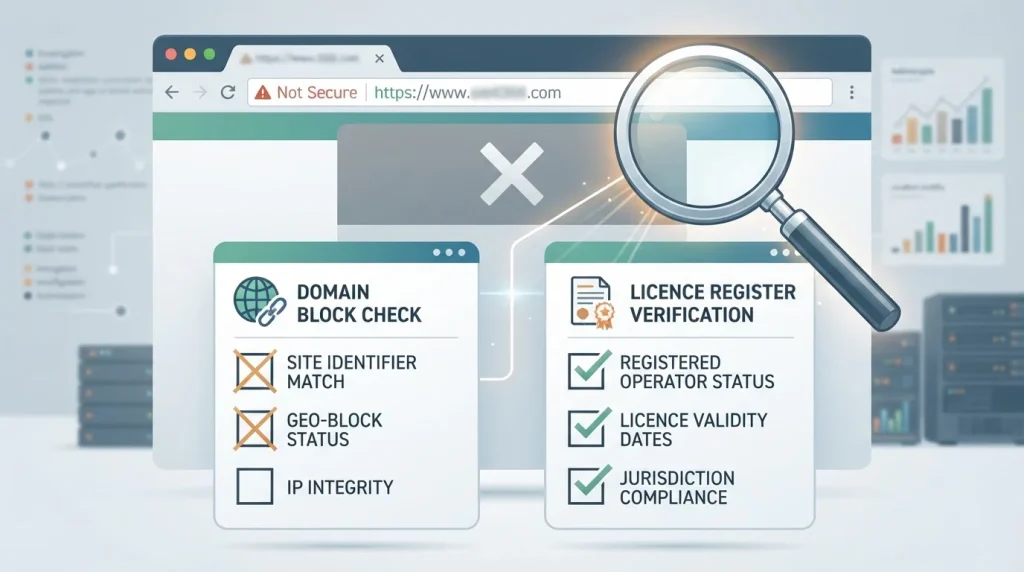
SunSpin Australia Guide
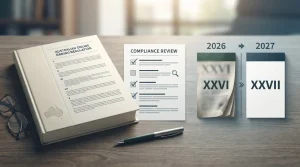
ACMA can ask Australian internet service providers to block gambling websites that it finds are operating in breach of the Interactive Gambling Act. That website-blocking program is separate from ACMA’s register of licensed interactive gambling providers. A brand can therefore require more than one check: licensing status and domain-level blocking evidence answer different questions.
This review did not verify a current SunSpin-specific entry in ACMA’s blocked-site material, so it does not say that SunSpin itself is blocked. It also did not verify an Australian local licence entry for SunSpin in the licensed-provider register. The right approach is to check the exact domain, the register and current ACMA enforcement material independently rather than converting one result into a broader claim.
Table of Contents
- How ACMA website blocking works
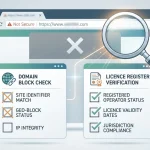
- Blocking and licensing are two different checks
- What ACMA’s 2026 enforcement numbers show
- Why this page does not say SunSpin is blocked
- A practical SunSpin ACMA check sequence
- How to use the licensed-provider register correctly
- How to read ACMA’s blocked-site list
- Clone and lookalike domain warning
- What evidence would justify a future SunSpin blocking claim
- Bottom line
- SunSpin Trust, Safety and Player Checks
How ACMA website blocking works
ACMA states that it can ask internet service providers to help disrupt illegal online content by blocking access to websites. Its blocked-gambling guidance cites section 313 of the Telecommunications Act 1997 as the authority used for these requests. The regulator applies the mechanism where serious criminal or civil offences are involved.
For gambling, ACMA gives three common examples. A website can be targeted for providing prohibited interactive gambling services to customers in Australia, such as online casinos or online slot machines. It can also be targeted for providing an unlicensed regulated interactive gambling service, such as online betting without a valid Australian licence. Advertising prohibited or unlicensed regulated gambling services can also fall within the framework.
A block is therefore an enforcement action tied to a service or website and the evidence ACMA has investigated. It is not a universal technical takedown. The content can remain hosted outside Australia, and the same operator may use alternate addresses. That is one reason ACMA’s quarterly reports often include multiple domains connected with the same service or attempts to evade earlier blocks.
The general legal framework behind those categories is explained on the Australian gambling law page. This page stays focused on what the blocking process means for a SunSpin access check.
Blocking and licensing are two different checks
ACMA’s licensed-provider register answers whether an interactive wagering service appears within the Australian licensed system. The blocking program records websites referred to Australian ISPs after enforcement findings. The same database does not perform both jobs.
| Check | Main question | What the result can support | What it cannot prove alone |
|---|---|---|---|
| Licensed-provider register | Is the wagering provider listed in Australia’s licensed interactive gambling framework? | Australian licensing status for the listed service | Whether a separate casino domain is currently blocked |
| Blocked-site material | Has ACMA referred a website for ISP blocking after a relevant breach finding? | Domain or service-specific enforcement context | A licence status for every similarly named property |
| Exact domain check | Am I evaluating the same website named in the source? | Identity matching | Ownership or corporate relationships not disclosed by evidence |
For SunSpin, the licensed-provider check did not verify an Australian local licence entry. The blocked-site research did not verify a current SunSpin-specific entry. Those two statements can both be true because they describe separate evidence sets.
What ACMA’s 2026 enforcement numbers show
ACMA’s April to June 2026 enforcement report gives a useful picture of the scale of activity without turning the numbers into a SunSpin claim. During that quarter, ACMA looked into 465 enquiries and complaints, completed 30 investigations involving 76 gambling sites, made 56 findings of breaches of the Interactive Gambling Act and issued 18 formal warnings.
The same report says 187 websites were referred to internet service providers for blocking during the quarter. ACMA also reported those 187 URLs to accredited family-friendly filter providers. Its breakdown of the 56 breach findings included prohibited interactive gambling services, unlicensed regulated interactive gambling services and advertising-related breaches.
A separate ACMA update dated 15 July 2026 said 1,774 illegal gambling and affiliate websites had been blocked since the first website-blocking request in November 2019. That cumulative figure is useful as dated enforcement context, but it does not mean 1,774 unique casino companies were convicted or permanently removed from the internet. A service can use more than one domain, and affiliate sites can be counted alongside gambling platforms.
ACMA continued publishing blocking updates after July, which is another reason every number should carry a date. The important lesson for a SunSpin review is not the size of the total by itself. It is that the Australian regulator runs an active, recurring program and publishes enough information to support domain-level checks.
The current quarterly source is ACMA’s April to June 2026 enforcement report.
Why this page does not say SunSpin is blocked
A brand-specific blocking statement needs brand-specific evidence. The minimum useful evidence would be an ACMA blocked-site entry, an ACMA enforcement report naming SunSpin, or an ACMA announcement identifying the exact SunSpin domain or service. General statistics about blocked gambling websites do not satisfy that test.
This project also treats name matching cautiously because current search results use SunSpin or Sunspin for different products and regions. A domain associated with a U.S. sweepstakes product, a Canada-oriented property or another similarly named site cannot automatically be treated as the Australia-facing real-money property reviewed here.
That is why technical accessibility is not enough either. A website loading today does not prove that ACMA has approved it, and a website failing to load does not prove that ACMA ordered a block. DNS issues, hosting outages, regional routing, browser filters and domain changes can all affect access. The regulatory claim should come from the regulator record, not from a single connection test.
The broader trust checks page explains why property identity is the first step before relying on support, KYC, licence or payment information.
A practical SunSpin ACMA check sequence
Use the following sequence when you want to verify a SunSpin domain without overreading any one source.
- Write down the exact domain. Do not search only the brand name. Include the full hostname you are actually visiting because lookalike and alternate domains are common in online gambling.
- Check the site identity. Look for the operator name, terms page and any disclosed licence information. Record what the site itself claims, but do not treat the claim as verified yet.
- Search ACMA’s licensed-provider register. The current register did not produce a verified SunSpin entry for this project. Repeat the check using both the trading name and any legal operator name the site clearly discloses.
- Check ACMA’s blocked-gambling material. Search the exact domain and brand spelling against current blocked-site information and recent enforcement reports. A close spelling is not enough.
- Check redirects. If the domain forwards elsewhere, repeat the check for the destination domain. A clean-looking redirect can still move you to a different property than the one described in a review.
- Compare the result with the cashier and support identity. Payment instructions, email domains and support links should belong to the same property you checked. The SunSpin payments guide covers that consistency test in more detail.
- Date your conclusion. ACMA updates enforcement material over time, so record when you checked. A statement that was accurate months ago can become stale after a new blocking request or service change.
How to use the licensed-provider register correctly
ACMA tells consumers to check whether an online wagering service is on its register of licensed interactive gambling providers. The register lists trading names, licence holders, URLs and licensing authorities. It is a strong source because it connects the consumer-facing name with the underlying Australian licence holder.
For SunSpin, no matching current entry was verified in the register checked for this project. The correct public wording is therefore about the absence of a verified Australian local licence, not a claim that ACMA has refused a licence application or made a criminal finding against the brand.
This distinction is especially important for online casino reviews because ACMA does not operate a normal Australian online-casino licensing category equivalent to the licensed wagering register. The Interactive Gambling Act separately prohibits providers from offering online casino-style services to people in Australia.
You can repeat the search on ACMA’s current licensed-provider register. If the property gives a company name, search that as well as SunSpin. If it gives no clear operator identity, do not fill the gap by importing a company from an unrelated SunSpin website.
How to read ACMA’s blocked-site list
ACMA’s blocked-gambling page explains why the regulator requests blocks and links to its alphabetical list of blocked illegal gambling websites. The useful unit is the actual website or service named in the record. Similar names can represent unrelated businesses, while one operator can use many domains.
This creates two common research errors. The first is a false positive: finding a similarly named casino and saying SunSpin is blocked without matching the exact domain. The second is a false negative: checking only one old domain even though a service has moved to a new address or ACMA has named an alternate domain in a later report.
The safest method is to combine the alphabetical list with recent ACMA enforcement reports and news updates. Search the exact hostname, not just the display brand. If ACMA has named a service but the domain relationship is unclear, keep the claim at the service level until the source supplies the domain.
ACMA’s explanation of the blocking mechanism is on its blocked gambling websites page.
Clone and lookalike domain warning
ACMA’s enforcement reports show why domain matching deserves attention. The regulator’s lists include alternate sites created to evade blocks and domains that imitate licensed services. A familiar trading name inside a URL is therefore not enough evidence that a site belongs to the licensed operator you think it does.
When checking SunSpin, compare the visible brand with the full domain, terms, operator disclosure and support domain. Be cautious if a page suddenly changes operator information, routes payment instructions through a different brand or asks you to ignore a browser or ISP warning. Those signals do not establish an ACMA finding by themselves, but they are reasons to stop and re-check the property identity.
Do not rely on old screen captures of block lists supplied by affiliate sites. Use ACMA’s live material wherever possible, because enforcement records and domain lists change. The same principle applies to third-party claims that a casino is “ACMA approved” when no corresponding register entry can be verified.
What evidence would justify a future SunSpin blocking claim
This site would publish a SunSpin-specific blocking statement only after a current authoritative source ties the brand or exact domain to ACMA enforcement. Suitable evidence would include an ACMA article naming SunSpin, a quarterly enforcement report naming the service or domain, or the exact SunSpin domain appearing in ACMA’s blocked-site records.
If that evidence appears later, the page should state the date and the exact scope of the action. It should distinguish a request for ISP blocking from broader claims about company ownership, criminal liability or status in other countries. The wording should also identify whether ACMA named a service, a single domain or multiple alternate domains.
Until such evidence is verified, the supported position remains narrower: SunSpin was not verified in the Australian licensed-provider register, and this research did not verify a current SunSpin-specific blocked-site entry. For the overall assessment, return to the main SunSpin review.
Bottom line
ACMA’s website-blocking program is active and substantial. Its April to June 2026 report recorded 56 Interactive Gambling Act breach findings and 187 websites referred for blocking, while the July 2026 update put the cumulative total at 1,774 illegal gambling and affiliate websites blocked since November 2019. Those figures show enforcement activity, not a SunSpin-specific finding.
For SunSpin, keep the checks separate: verify the exact domain, search the licensed-provider register, review current blocked-site material and confirm any operator identity before drawing a conclusion. That method produces a defensible result even when a brand name is reused across different websites or countries.